The F-22 Raptor — My favorite aircraft
The F-22 Raptor is my favorite aircraft by a significant margin. It was designed for one purpose — air superiority — and it executes that role with a level of technical refinement that no other fighter has matched.
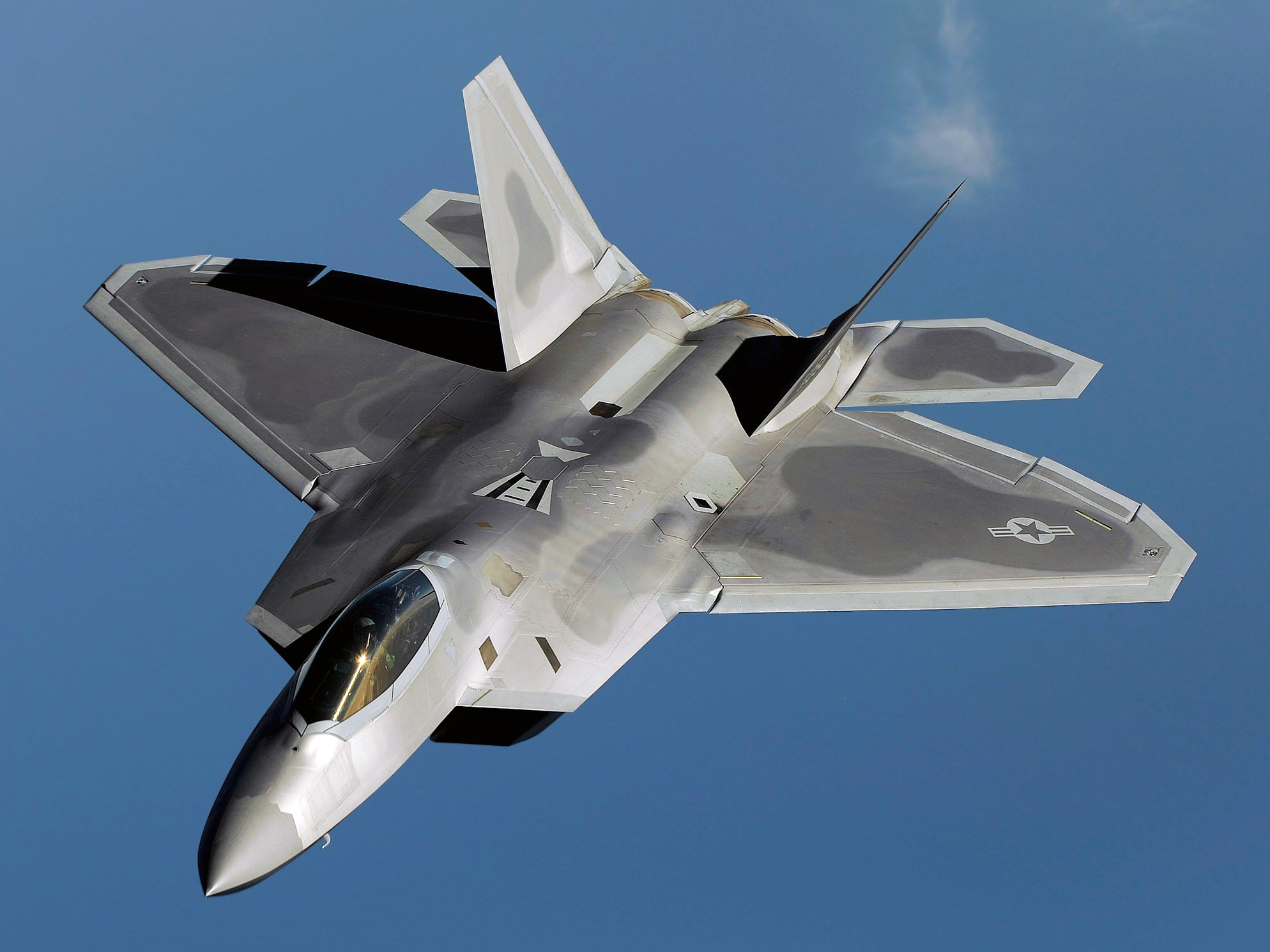
F-22 Raptor — Air superiority, perfected
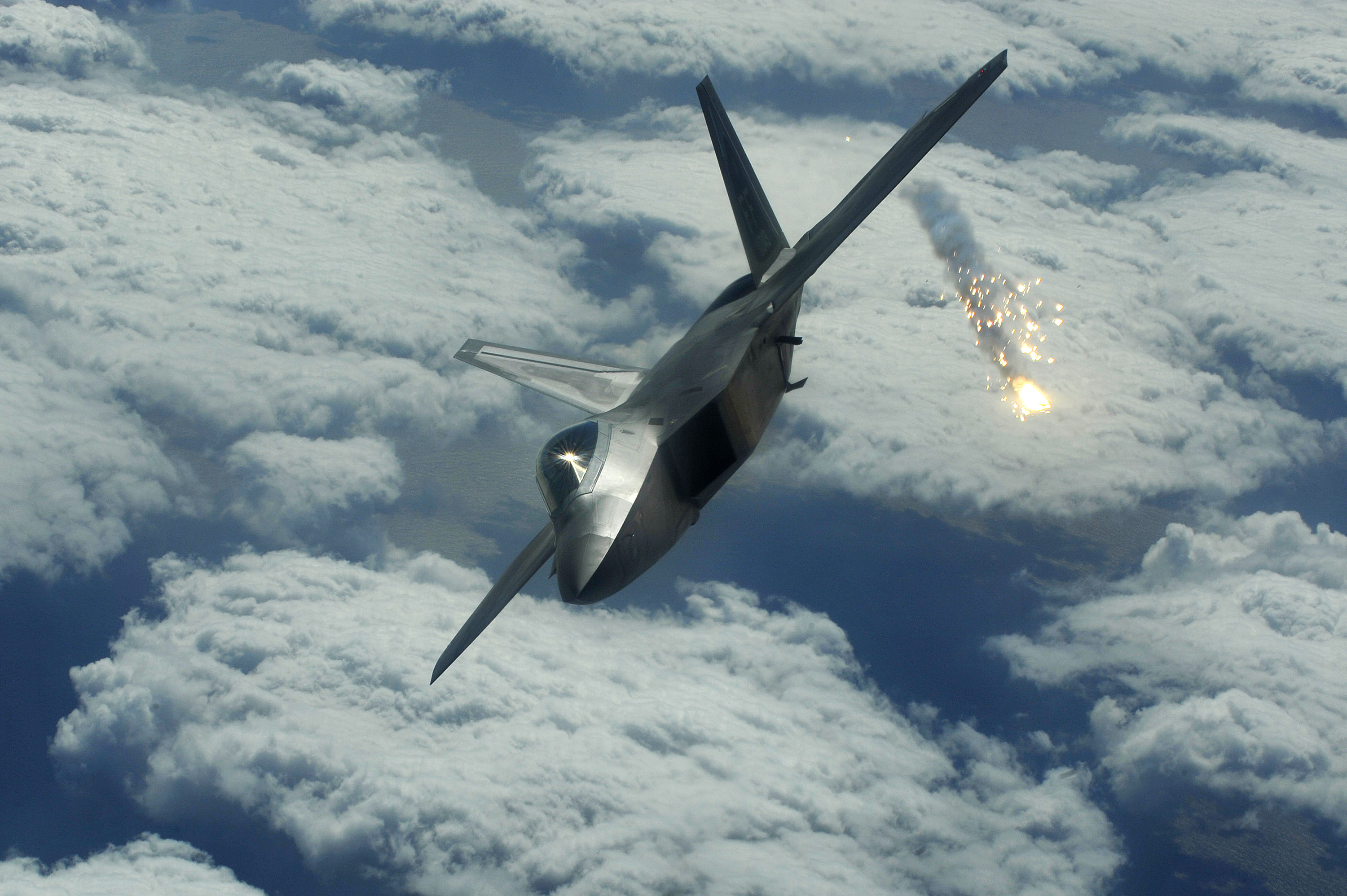
F-22 deploying flares — Defensive countermeasures in action
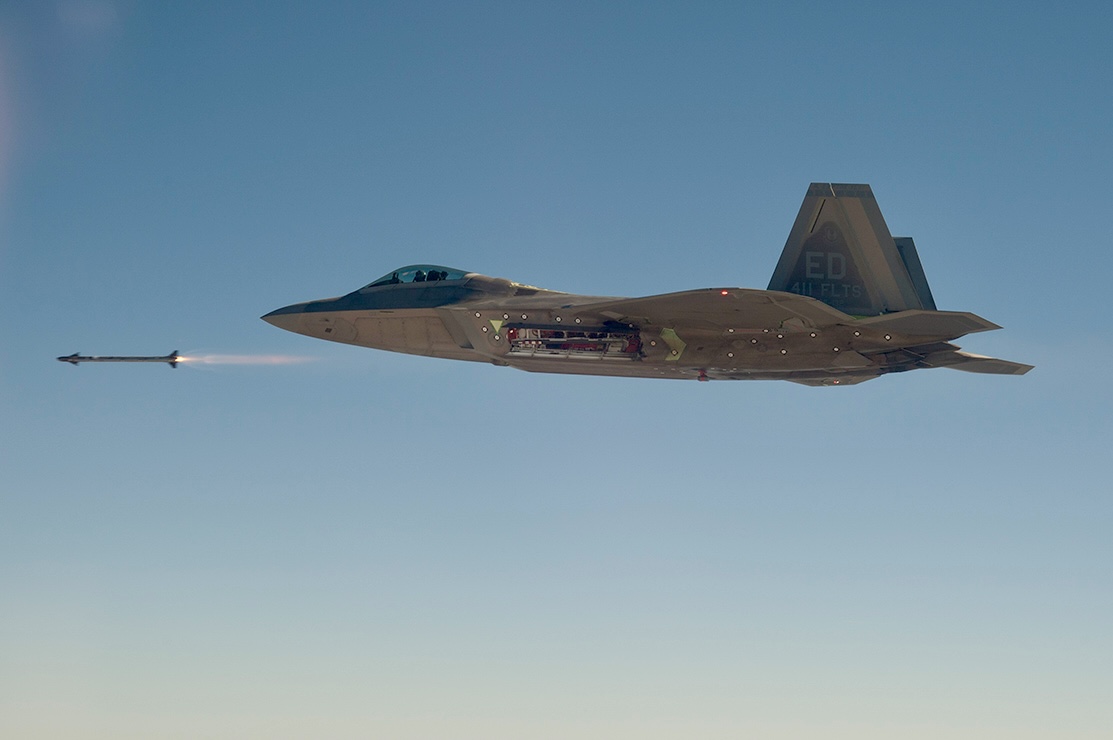
F-22 test-firing AIM-9X Sidewinder — Stealth meets lethality
The F-22 is a pure air-superiority platform with no multirole compromise — that design discipline is increasingly rare and deserves respect. Its supercruise capability (Mach 1.8 without afterburners) is enabled by the Pratt & Whitney F119-PW-100 engines, each rated at approximately 35,000 lbf in the 35,000–39,000 lbf class depending on the source. The F119 features a three-stage fan, single-stage HP turbine, and counter-rotating spools — architecture that prioritizes high temperature tolerance and thrust at altitude. The two-dimensional thrust-vectoring nozzles deflect ±20° in pitch, giving the Raptor post-stall maneuverability that no fixed-nozzle aircraft can match.
The AN/APG-77 AESA radar provides long-range detection (estimated 200+ km against non-stealth targets) with LPI characteristics that make it extremely difficult to detect passively. The Raptor's radar cross-section is estimated at 0.0001 m² or below — roughly equivalent to a steel marble — achieved through airframe geometry, radar-absorbent materials, and edge alignment. The combination means the F-22 can detect and engage adversaries at ranges where they have no awareness of its presence.
The Raptor generation represents a design philosophy that we're unlikely to see repeated — a no-compromise, single-role fighter built at enormous unit cost (~$150M in then-year dollars) for the explicit purpose of guaranteeing air dominance against any projected threat. The production run of 187 aircraft (excluding test articles) reflects the post-Cold War calculus shift, but the platform itself remains the benchmark for air superiority over two decades after its introduction.
Blog
Blog posts coming soon
Check back later — I'm crafting something worth reading.
First post in progress
Deep dives on engine architecture, thrust vectoring, and the evolution of fighter design philosophy.