All About Missiles
Missiles are one of the most advanced pieces of technology we've ever created — hitting a bullet with another bullet on the edge of space. The guidance, propulsion, and sensor integration that goes into modern strike and defense systems is genuinely incredible.
MIM-23 HAWK
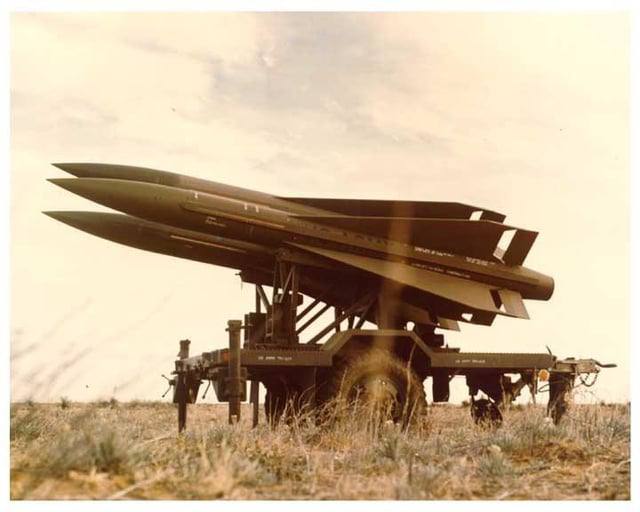
The MIM-23 HAWK is a Cold War surface-to-air system that remained in service for over fifty years — a testament to its original design. The missile uses a solid-fuel boost-sustainer motor with semi-active radar homing (SARH) guidance, engaging targets in the low-to-medium altitude regime. The triple-rail trailer-mounted launcher and the distinctive delta-wing airframe are immediately recognisable. The HAWK saw service with the US Marine Corps, Israeli Air Force, Iranian air defense, and dozens of other operators, receiving continuous radar and ECCM upgrades (Improved HAWK, HAWK PIP, HAWK XXI) that kept it viable well into the 21st century. Its longevity is a case study in incremental modernization of a fundamentally sound design.
MGM-140 ATACMS on M142 HIMARS
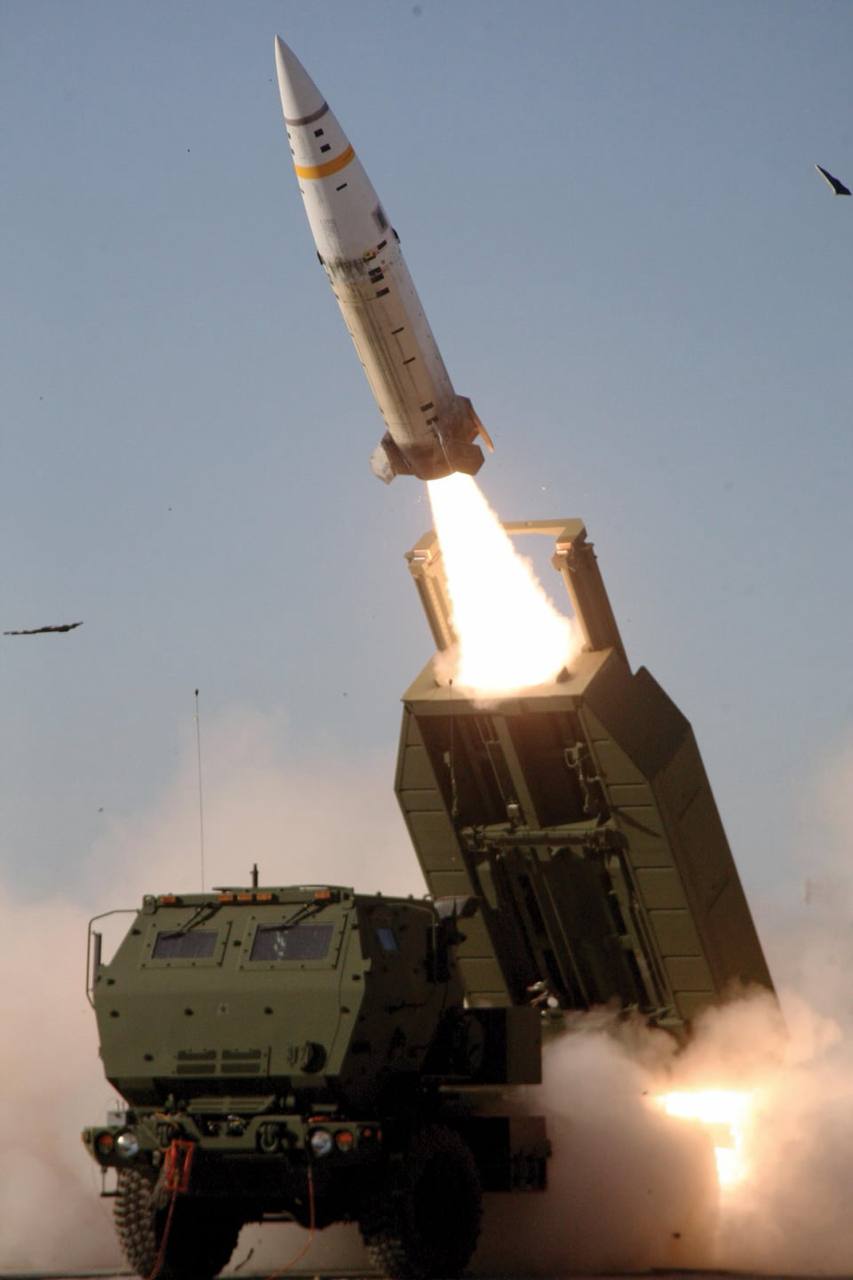
The ATACMS is a 610mm guided tactical ballistic missile with a range of 165–300 km depending on the variant (M39, M57, M57A1). Guidance is via INS with GPS updates, delivering CEP accuracy in the single-digit meters. The missile launches from the M142 HIMARS (6×6 FMTV chassis) or M270 MLRS (tracked), with a single ATACMS pod replacing the standard six-rocket MLRS loadout. The M57 variant carries a 500 lb unitary HE warhead. The shoot-and-scoot capability of the HIMARS platform — fire, displace within two minutes, relocate before counter-battery solutions converge — has proven particularly effective in contested environments where radar detection and time-to-target calculations determine survivability.
THAAD
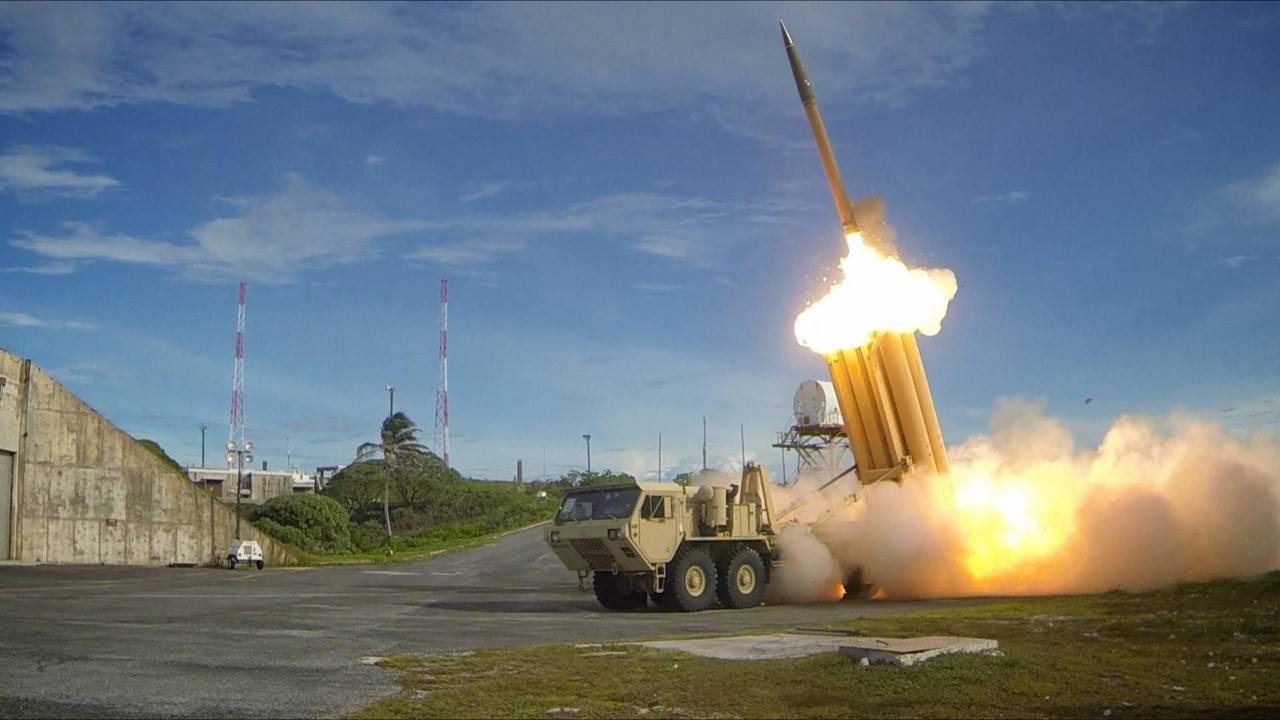
The THAAD (Terminal High Altitude Area Defense) system is an exo-atmospheric anti-ballistic missile interceptor. Each launcher carries eight missiles that engage incoming ballistic threats at altitudes above 100 km using hit-to-kill kinetic energy (no explosive warhead). The AN/TPY-2 X-band radar provides acquisition and track discrimination at ranges exceeding 1,000 km, with enough resolution to distinguish warheads from decoys during the midcourse phase. The interceptor itself uses a liquid-divergent jet attitude control system for endgame maneuvering in the near-vacuum environment where aerodynamic surfaces are ineffective. THAAD operates as the upper tier of the US Army's layered ballistic missile defense architecture, with PAC-3 handling lower-altitude terminal engagements underneath it.
These three systems span the breadth of missile engineering: the HAWK's phased-array modernization of a proven 1960s airframe, the ATACMS's INS/GPS precision strike from a mobile truck platform, and the THAAD's kinetic-intercept, exo-atmospheric defense against medium-range ballistic missiles.
Blog
Blog posts coming soon
Check back later — I'm crafting something worth reading.
First post in progress
Deep dives on missile guidance systems, propulsion, and battlefield integration.